What Makes an Outdoor Trash Can Durable?
A trash can can look sturdy in the store and still develop a cracked rim, damaged wheel, or loose lid after months of curbside use. Real durability comes from how the entire container is built, especially the body material, rim, axle, wheels, lid, and areas that repeatedly contact pavement or collection equipment.
If you are comparing a trash can for sale, look beyond capacity and appearance. A durable outdoor can should handle regular loading, rolling, dragging, weather exposure, and the repeated movement involved in trash collection without its most vulnerable components wearing out prematurely.
Here is what deserves the closest attention.
What Actually Makes an Outdoor Trash Can Durable?
Outdoor trash cans face a much harder life than most indoor containers. They are filled with heavy bags, rolled across pavement, left in changing weather, tipped backward onto their wheels, and handled during collection.
Because of that, durability depends on several features working together:
A strong plastic body that can tolerate normal impacts and outdoor exposure
Reinforcement around the rim and other high-wear areas
An axle designed to support repeated rolling and loaded movement
Wheels that can travel over driveways, curbs, and uneven surfaces
A lid and hinge system capable of frequent opening and closing
A stable shape that remains manageable when the can is loaded
Compatibility with the collection method used for your property
One feature alone does not make a trash can durable. A thick body with weak wheels can still become frustrating to use, just as excellent wheels cannot compensate for a rim that cracks under repeated handling.
Strong Body Material Is the Starting Point
The container body takes impacts from trash bags, outdoor storage, tipping, dragging, and routine collection. Quality outdoor garbage cans are commonly made from durable plastics because plastic resists rust and can be formed into a relatively lightweight container that is still strong enough for everyday waste.
The more useful question is not simply, "Is it plastic?" It is how the container has been designed and reinforced.
Look closely at areas where stress concentrates. The upper rim, wheel mounting points, bottom edge, handle area, and hinge connections tend to experience more repeated force than the middle of a flat sidewall.
Some manufacturers build additional material into these locations. Toter, for example, describes its two-wheel carts as using a reinforced Rugged Rim and bottom wear strip to strengthen areas exposed to regular impact and dragging. Toter Two-Wheel Carts
That illustrates an important buying principle: durability often depends as much on structural design as it does on the basic material.
A Reinforced Rim Helps Protect a High-Stress Area
The rim is easy to overlook, but it is one of the hardest-working parts of an outdoor trash can.
It can experience stress when you lift the lid, pull the container, load bulky bags, tip the can, or move it into position for collection. Once the rim cracks or loses its shape, the lid may stop closing correctly and the rest of the container can become harder to handle.
A reinforced or thicker wear lip puts additional material where repeated contact and impact are more likely.
Our 45-gallon cans use a 1-inch wear lip. That reinforced edge is one of the features intended to help the container stand up to regular curbside use rather than relying on a thin upper edge that can become a weak point.
When comparing cans, inspect the rim rather than judging the product solely by the thickness of its sidewalls.
The Axle Matters More Than Most Buyers Realize
A wheeled trash can becomes much less useful when the axle bends, loosens, or allows the wheels to wobble.
The axle carries a significant portion of the load whenever you tilt the container and roll it toward the curb. That means an axle must handle more than the empty weight of the can. It needs to support repeated movement with household waste inside.
A solid metal axle can provide a strong connection between the wheels and container body. Our 45-gallon outdoor trash cans use a solid steel axle for this reason.
Check the axle attachment points as well. A strong axle attached to a poorly reinforced plastic mounting area can still become a failure point over time.
Durable Wheels Need to Handle Real Driveways and Curbs
Wheel quality affects both durability and everyday usability.
A trash can that rolls smoothly requires less dragging, which can reduce unnecessary wear along the bottom of the container. Well-designed wheels also make a loaded can easier to move across the surfaces found around a typical home.
Consider the route your trash can actually travels. You might need to move it across:
Asphalt
Concrete
Paver driveways
Sidewalk joints
Small lips between surfaces
Uneven pavement
Curbs
Wheel diameter, tread, axle strength, and how securely the wheels attach to the body all influence how well the can handles those conditions.
Our 45-gallon cans include smooth-rolling wheels designed for curbside use. The goal is not simply easier movement on day one. A durable wheel-and-axle assembly should continue functioning after repeated trips between your storage area and pickup point.
A Durable Lid Needs Strength and a Secure Connection
The lid receives constant use but is sometimes treated as an accessory rather than part of the can's structure.
A good outdoor lid should open and close easily while remaining securely connected to the container. The hinge area deserves particular attention because repeated movement concentrates stress in a relatively small location.
The lid should also fit the can properly. A badly warped or poorly fitting lid can allow rain into the container and make the can more difficult to keep clean.
Some consumer designs add features specifically for outdoor use. The Rubbermaid Roughneck Vented Wheeled Trash Can, for example, uses a hinged snap-fit lid along with wide wheels and a body designed for outdoor environments.
Whatever brand you choose, inspect both the lid itself and the points where it connects to the can.
Collection Compatibility Can Affect Long-Term Durability
A strong trash can still needs to suit the way your waste is collected.
Automated and semi-automated collection equipment interacts with containers differently than manual pickup. A can intended for compatible collection equipment should have the appropriate shape and structural features for that handling.
That is why collection compatibility is worth checking before buying, particularly if your sanitation provider uses mechanical lifting equipment.
Our 45-gallon cans are designed to fit most automated trash collection systems. If you are unsure about requirements for your address in Dix Hills, checking your current waste hauler or municipal collection requirements before purchasing can help prevent compatibility problems.
Size Can Influence How Much Stress a Trash Can Experiences
Buying the largest can available is not automatically the most durable choice.
A container that is regularly overloaded may experience additional stress around its wheels, axle, handle, rim, and lid. At the other extreme, choosing a can that is too small can lead to bags being forced into the container or piled against a lid that cannot close properly.
Think about how much household waste you normally generate between collections and choose enough capacity without creating an unnecessarily bulky container.
Our current can has a 45-gallon capacity and measures approximately 27.4 inches deep, 22.6 inches wide, and 39.2 inches high. Those dimensions are worth comparing with your garage, side-yard storage space, gate openings, and normal path to the curb before ordering.
Weather Resistance Is Part of Outdoor Durability
In Dix Hills and elsewhere on Long Island, an outdoor trash can may remain outside through summer sun, rain, cold weather, and seasonal temperature changes.
Outdoor exposure makes material quality particularly relevant. Ultraviolet exposure can affect some plastics over time, while repeated temperature changes can place stress on weaker materials.
Manufacturers sometimes use UV inhibitors or UV-stable materials to address outdoor exposure. Rubbermaid Commercial, for example, identifies UV inhibitors as a durability feature in several of its outdoor rollout containers. Rubbermaid Commercial Rollout Containers
You should still follow any manufacturer guidance for the specific container you own rather than assuming every plastic trash can has the same resistance to prolonged weather exposure.
Durability Also Depends on How You Use the Can
Even a heavy-duty outdoor trash can benefits from reasonable handling.
Avoid repeatedly exceeding the manufacturer's load limits, dropping extremely heavy objects into an empty container from height, or dragging the bin unnecessarily when its wheels can be used. If something sharp has punctured a trash bag, check that it is not continuing to scrape or gouge the interior walls.
Cleaning also helps you inspect the can. Once grime and residue are removed, cracks, loose wheels, damaged hinges, and other wear can be easier to notice.
A basic hose rinse can remove loose dirt and some visible residue. More persistent buildup may require a more thorough cleaning process.
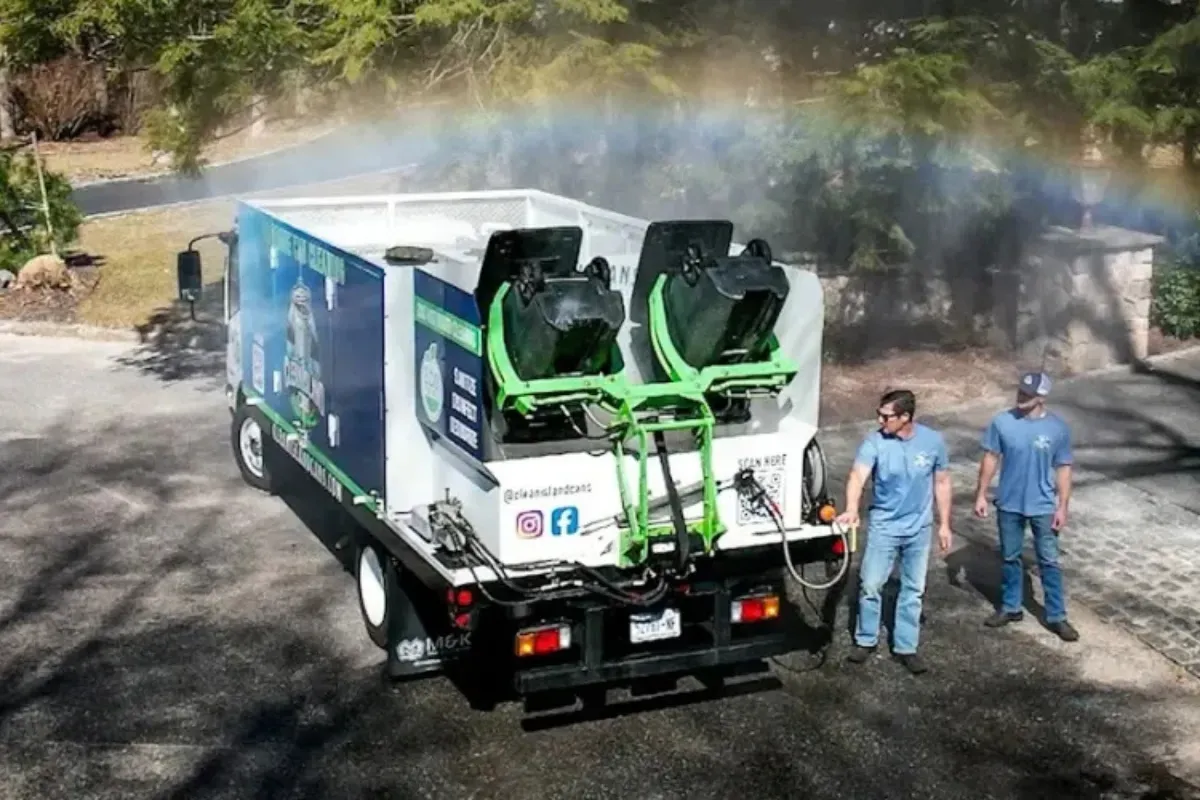
At Clean Island Cans, our professional trash can cleaning is a specialized curbside service rather than ordinary household pressure washing. We clean bins the day after regular trash pickup using equipment designed for bin cleaning, followed by sanitizing and deodorizing. We also offer monthly, quarterly, and one-time cleaning options for homeowners who want different levels of ongoing maintenance.
Cleaning cannot prevent normal wear or make a damaged trash can structurally new again, but keeping the container clean makes routine inspection and maintenance easier.
Useful Outdoor Trash Can Designs and Features to Compare
Looking at established manufacturers can help you understand which construction features are commonly associated with heavy-duty carts. These resources are provided as neutral examples for comparison and do not imply that Clean Island Cans uses, sells, or is affiliated with these brands.
Toter Two-Wheel Carts
Toter Two-Wheel Carts use features including a reinforced rim, bottom wear strip, and impact-resistant construction. Reviewing designs like these can help you see how manufacturers strengthen areas exposed to repeated curbside wear.
Rubbermaid Roughneck Vented Wheeled Trash Can
The Rubbermaid Roughneck Vented Wheeled Trash Can is another consumer example that combines outdoor-oriented body construction with wide wheels and a connected lid. Comparing these details can be more informative than judging cans based only on gallon capacity.
Rubbermaid Commercial Rollout Containers
Rubbermaid Commercial Rollout Containers illustrate several structural features worth examining, including reinforced rims, heavy-duty wheels, robust lids, and UV inhibitors.
Always check manufacturer specifications, weight limits, collection compatibility, and care instructions for the particular trash can you are considering.
What to Inspect Before Buying a Trash Can
A quick hands-on inspection can reveal a lot about construction quality. Before purchasing, check:
Rim: Does it feel reinforced, or does it flex excessively?
Body: Are the walls and corners substantial enough for regular outdoor use?
Axle: Is it solid and securely mounted?
Wheels: Do they roll smoothly without excessive wobble?
Wheel mounts: Are the surrounding areas reinforced?
Lid: Does it close properly and remain securely attached?
Hinges: Do they look capable of repeated opening and closing?
Bottom: Is there extra protection in areas likely to scrape pavement?
Handle: Can you comfortably control the can when it is tilted?
Collection compatibility: Will the design work with your normal pickup method?
Dimensions: Can you move it through gates and store it where you intend?
Capacity: Does it fit the amount of waste your household typically produces?
These details tell you far more about durability than appearance alone.
When Is It Better to Replace an Old Trash Can?
Not every scratch or scuff means your can needs to be replaced.
Cosmetic wear is normal for a container that spends years traveling between your property and the curb. Replacement becomes more reasonable when damage begins interfering with normal use.
Examples include a severely cracked body, a rim that no longer supports the lid correctly, broken wheel mounting points, an unreliable axle, or structural damage that makes the can difficult to roll or keep upright.
A damaged lid may sometimes be replaceable depending on the manufacturer. The same may be true for wheels or other components. Checking replacement-part availability before discarding the entire container can be worthwhile.
Frequently Asked Questions About Clean Island Cans
What services does Clean Island Cans offer?
Clean Island Cans provides professional trash can cleaning for homeowners, along with a trash can for sale for customers who need a new outdoor container. Our cleaning service focuses on removing buildup, sanitizing the inside and outside of your trash cans, and deodorizing them after cleaning.
We clean bins the day after your regular trash pickup so the cans are empty and ready for service. Customers can choose monthly, quarterly, or one-time cleaning options depending on what works best for their home and schedule.
How does your trash can cleaning service work?
After your regular waste collection, our team comes to your property and cleans your garbage bin using equipment made for bin cleaning. The process removes dirt, liquids, and other buildup that can collect inside the container over time.
We then sanitize and deodorize the bin before putting it back in place. This is a simple way to keep outdoor cans cleaner without having to wash them yourself. You do not need to bring your cans indoors or complete complicated steps before service.
How often should I have my trash cans cleaned?
The right schedule depends on how much waste your household produces, the season, and how quickly your cans become dirty. Monthly cleaning can be useful for homes that regularly deal with food residue, leaking bags, or heavy kitchen trash.
Quarterly service may be enough if your cans stay fairly clean between pickups. A one-time service is also available when you simply want a deeper check and cleaning without an ongoing plan.
Keep in mind that outdoor bins need different care than a kitchen trash can or small bathroom can used indoor. Outdoor containers are exposed to weather, pavement, and regular curbside handling.
Do you sell new trash cans?
Yes. Clean Island Cans offers a 45-gallon trash can for sale for homeowners who need a dependable outdoor product. The can is designed to hold normal household trash while remaining easy to move to and from the curb.
It includes a reinforced 1-inch wear lip, a solid steel axle, and smooth-rolling wheels. The can is also designed to work with most automated collection systems. Before ordering, it is still a good idea to check the requirements used by your local trash hauler.
Unlike a smaller kitchen trash can, this container is made to stand outdoors and handle regular curbside use. The materials, wheels, axle, lid, and rim all play a part in how well an outdoor can holds up.
Can you clean recycling bins too?
In many cases, yes. Recycling containers can develop residue just like regular trash bins, especially when bottles, cans, food containers, or other items still contain liquids when they are placed inside.
Contact us with information about the container you want cleaned so we can confirm your available service options. The best approach may depend on the size and type of bin displayed at your property and the services available in your area.
Do I need to be home when my bins are cleaned?
In most cases, you do not need to be home as long as the bins are accessible after pickup. Leave them in the agreed service location so our team can reach them without unnecessary waiting.
If you schedule or manage your service through our website, you may occasionally see standard online security checks. A website may use a security service that verifies that normal visitors are using the page instead of automated malicious bots.
Messages such as performing security verification, security verification, or verification successful can appear when a website is trying to protect itself from harmful automated traffic. In some cases, a security screen may mention a bot check or request Ray ID information for troubleshooting. These website checks are separate from your trash can cleaning appointment.
How do I know when it is time to replace my trash can?
Normal scratches and marks do not always mean you need a new can. Replacement may make sense when damage prevents the container from doing its job properly.
Look for serious cracks, broken wheels, loose wheel mounts, a damaged axle, or a lid that no longer closes. The can should remain stable when you stand it upright and should be able to hold normal household trash without major structural problems.
If you are comparing a new garbage bin, pay attention to the construction rather than choosing only because a model is marked as a best seller. Strong materials, reliable wheels, a secure lid, a reinforced rim, and the right capacity are more useful things to compare.
How can I schedule service or buy a trash can?
You can contact Clean Island Cans by calling or texting 631-213-1238, or you can visit our website and contact page for more information.
Tell us whether you are interested in trash can cleaning, recycling bin cleaning, or a new trash can for sale. We can explain the available options and help you choose the service or product that makes the most sense for your home.
If you are buying a can, consider the amount of waste your household produces, where the can will stand, how much space you have, and the route it will travel on the way to the curb. Taking a little time to check those details can help you choose a can that fits your needs.
Choose Durability Where It Counts
A durable outdoor trash can is more than a thick plastic container. The strongest designs reinforce the areas that take the most abuse, support loaded movement with dependable wheels and axles, protect the lid and rim, and remain practical for the collection system you actually use.
For homeowners in Dix Hills comparing a trash can for sale, our 45-gallon option includes a 1-inch wear lip, solid steel axle, smooth-rolling curb-safe wheels, and compatibility with most automated collection systems. It is currently priced at $85, reduced from $95.
If you have questions about buying a can or want to learn more about Clean Island Cans services, call or text 631-213-1238 or Contact Us.


